The Recipes That Leave With Them: How to Save Your Parents' Dishes and the Stories Behind Them (October 2026)
My mother never once measured anything.
A handful of this, a pinch of that, and "until it smells right." I used to stand in the kitchen doorway and watch her make the dish our whole family waited all year for, certain I'd always be able to ask her how she did it. There would always be a next time.
There's a kind of grief that doesn't show up until later, when you finally try to make the thing yourself and it comes out wrong. Not a little wrong, but wrong in a way you can't name and can't fix, because the recipe was never on a card. It lived in her hands, in a thousand small decisions she made without thinking, and in the reason she started making it in the first place. All of that left with her.
If your parents or grandparents are still here, you have what most people only wish they had, which is the chance to ask. This is a guide to capturing the dish and the story cooked into it, while the person who knows both is still within reach of a phone call.
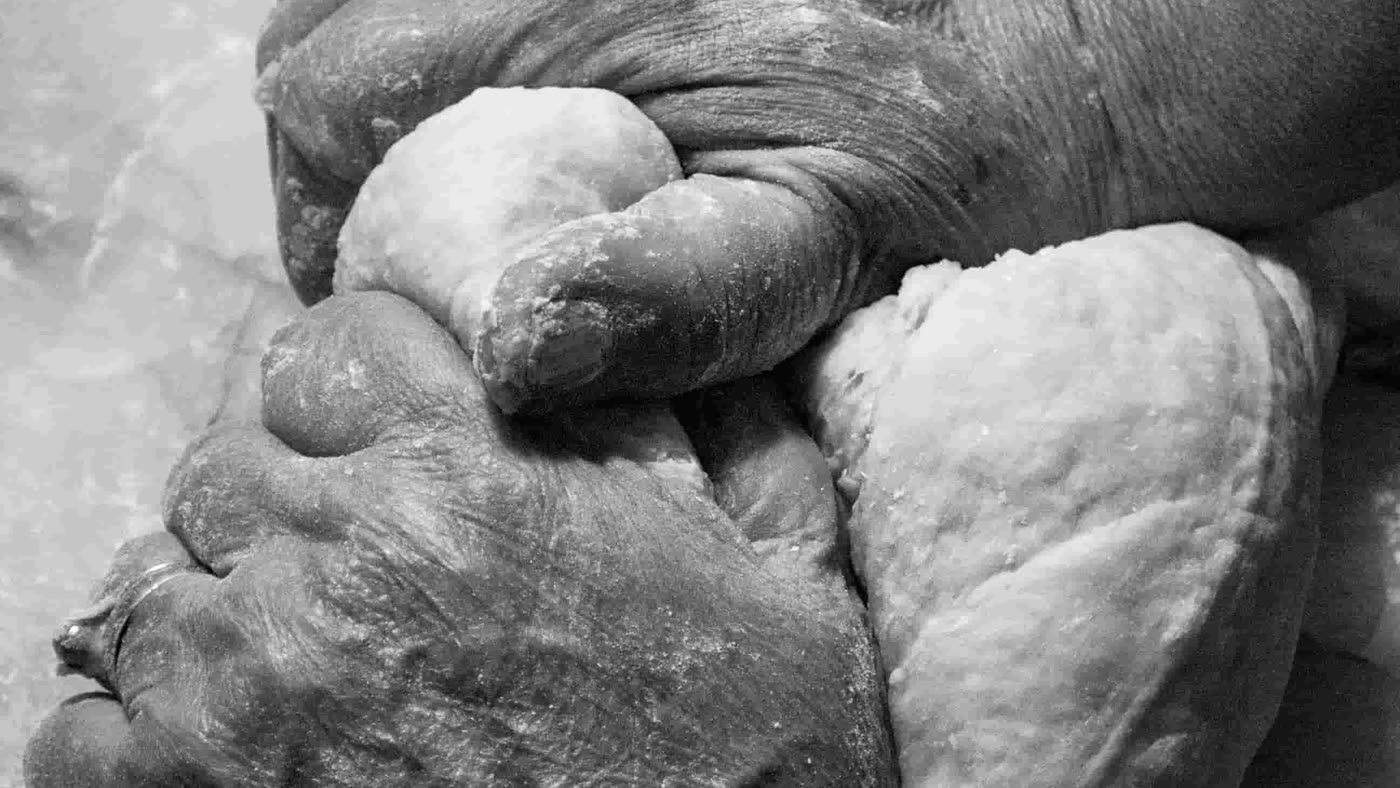
Why the recipe is never the whole story
Ask most families where their best dish comes from and you'll get a shrug. It came from Mom, or Grandma, or the old country. Press a little, though, and a whole history spills out: the aunt who taught it, the lean years when it was all they could afford, the wedding it was first served at, the small change someone made in 1979 that everyone has quietly kept ever since.
An index card gives you the what. It can't give you the why, and the why is what your children will actually want. Quantities you can approximate after a few attempts. The reason your grandmother always made twice as much as anyone could eat, so there'd be something to send home with whoever stopped by, you can only get from the person who lived it.
Start with one dish, not the whole cookbook
The common mistake is trying to document everything at once. It turns into a project, your parent feels put on the spot, and nobody enjoys it. Pick the one dish that would feel like a real loss if it disappeared, the one you'd be sad to taste a worse version of at every future holiday. Just that one.
Then don't ask them to "give you the recipe." Ask them to tell you about it. The difference sounds small, but it changes what you get back, because a recipe request makes people recite steps and a story request makes them remember.
Questions that open it up
Recipes come out flat when you question them like a form, with how much flour and how long in the oven. They come alive when you ask about the life around the dish. These tend to work:
- Who taught you to make this, and what do you remember about them?
- How old were you the first time you made it on your own?
- When did we eat this? Was it an everyday dish, or only for something special?
- Did you ever change it from the way you were taught, and why?
- Is there a particular time you made it that you remember better than the others?
- What do you hope we'll remember about it?
Only one of those is really about food. The rest are about them, which is the point. You'll collect the measurements along the way, but you'll also collect the person who made it, and no card can hold that. If you want questions beyond the kitchen once this one's done, our 50 questions to ask your parents about their life is a good next step, and there's a version for grandparents too.
How to capture the dish itself
Stories alone won't let you cook the dish, so this part matters just as much. The most reliable way to get a recipe out of someone who cooks by feel is to stand next to them while they cook it, and to bring a notebook, a measuring spoon and a small kitchen scale.
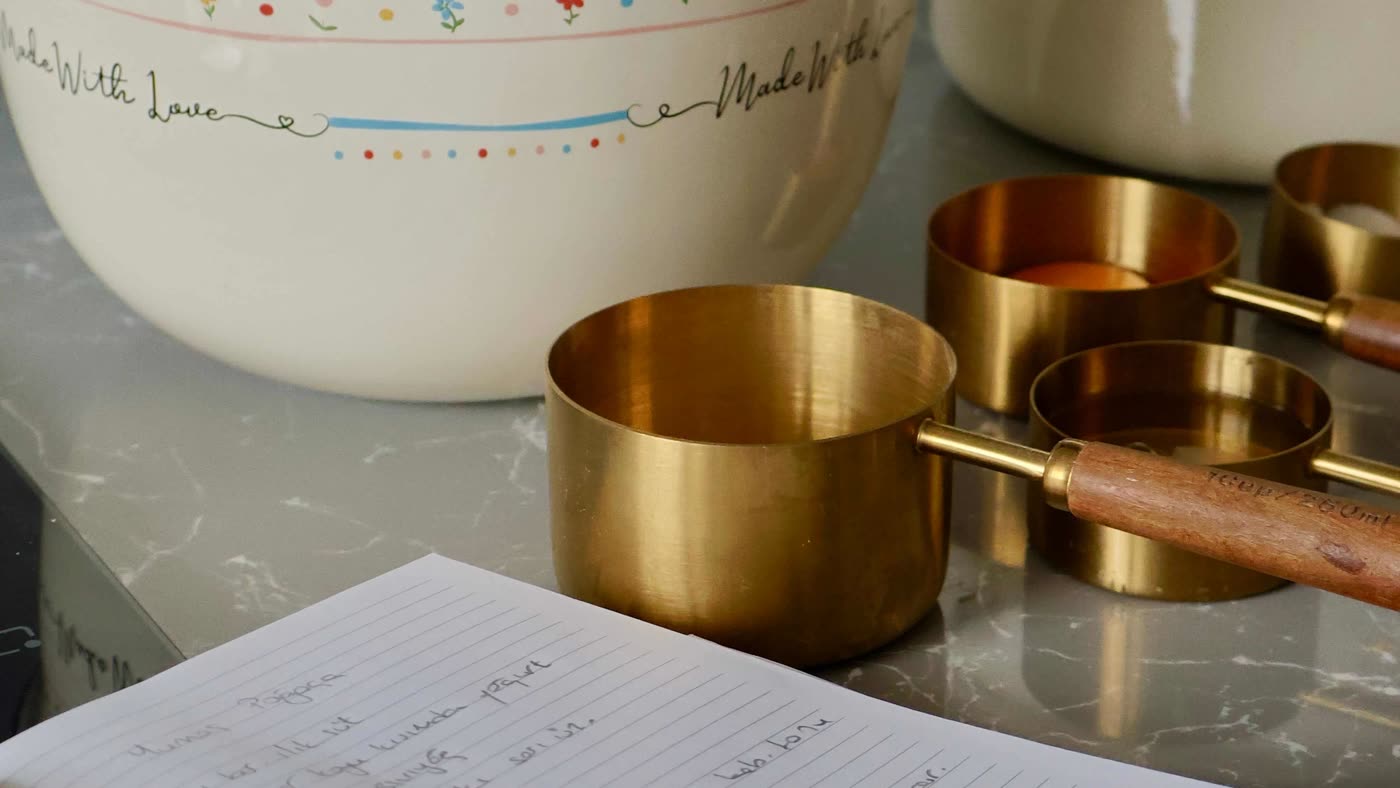
Measure their hands. When she says "a handful of flour," ask her to put that handful on the scale, or into your measuring spoon, and write down what it was. Do the same for every pinch, splash and glug. A parent who has never measured anything in their life can still show you their handful, and that's usually far more accurate than any number they'd guess at the table.
Write down the signs, not just the steps. Experienced cooks rarely go by the clock. They go by what they see, smell and hear: the onions should smell sweet but not sharp, the oil is ready when a drop of batter rises right away, the dough should feel like an earlobe. Ask "how do you know it's ready?" at every stage and write the answer in their words. These cues are the real recipe, and they're the first thing lost.
Ask about the substitutions. Most family dishes have been adapted many times, because one ingredient was too expensive or couldn't be found in a new country. "What do you use if you can't get X?" often leads to the best story of the day.
Take a photo at each stage. Of the pan, of the dough, of the finished plate. If they have a handwritten card or a stained page from an old cookbook, photograph that too. A picture of "what it should look like now" is worth more than a paragraph of description.
Cook it a second time. The first time you'll mostly watch, and the second time you can cook it yourself with them beside you saying "no, a bit more." That's when you find what was missing from your notes.
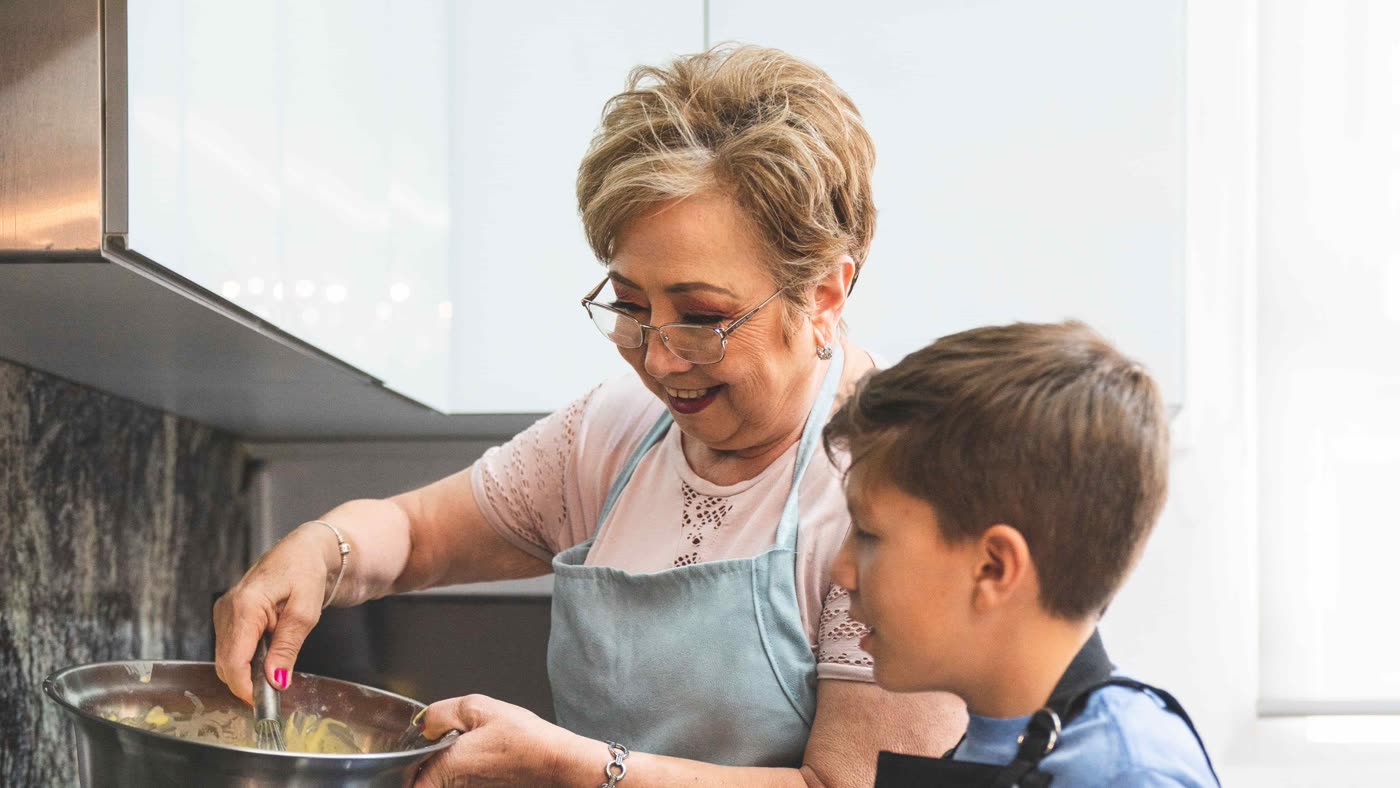
What a good answer looks like
The difference between a flat answer and a living one is easier to see than to describe. Here's the same dish captured two ways. The first is what you get if you ask for the recipe:
Make the dough and let it rest. Fry until golden. Serve hot.
And this is what you get if you ask about the dish:
Her mother-in-law taught her to knead it until it felt like an earlobe, and always made her press it with her thumb to check. She learned it the winter she got married, standing in a borrowed kitchen, afraid it would come out wrong in front of everyone. It never did, and she's made it for every birthday since.
The second is a recipe too, because it tells you the texture to look for. It's also a memory, and it's the one your grandchildren will read twice.
Keep it in their words
Many people listen, then go home and write their own summary of what their parent said. Within a few years the voice is gone and only the paraphrase is left. "Add the spices and simmer" is accurate, but nothing in it sounds like her.
Keep the phrasing, the asides, the "oh, I forgot to say" moments. That's where the warmth lives. If you're writing as they talk, put their exact words in quotation marks. If you want a longer conversation to flow without your parent feeling interviewed, how to interview your parents about their life covers how to make it feel like talking rather than a recording session.
This is also how we approached Legacy. Instead of a blank page or a stressful interview, it sends your parent one gentle question at a time through a simple link, with no app to download and no account to manage. They answer by typing or speaking, and their original answer is kept alongside the written memoir version, so the exact words aren't lost. A question like "what's a dish you make that no one else can?" tends to get a far better answer than "please write down the recipe," and they can add a photo of the dish while they're there. If your parent isn't comfortable with phones at all, collecting their stories without technology works just as well.
When they say "it's nothing special"
Many parents wave the question away. "It's just rice and lentils." "Everyone makes it that way." "I don't remember how I learned." That's usually modesty, not a refusal, and it's rarely true. A dish they've made ten thousand times has become invisible to them.
Don't argue with it. Say you'd like to taste it once more with them making it, and ask the smaller question instead: "What did your mother put in it that I always forget?" People who can't answer a big question about the past can usually answer a small one about a kitchen. If your parent tends to go quiet whenever the past comes up, how to get your parents to talk about their past goes into why, and what helps.
If it's too late to ask your parent
Some people reading this have already lost the person who made the dish. If that's you, it isn't over, and the dish usually exists in more than one head. Ask the aunt who stood beside her in the kitchen, the sibling who ate it every week, the neighbor who always got a plate. Ask them the same questions you'd have asked her, because their memory of how it looked, smelled and tasted is real evidence.
Then cook it with what you have, and expect to get it wrong a few times. Each attempt, tasted by the people who remember it, narrows the gap, and the day someone says "that's it, that's exactly her" is worth the effort. Write down what finally worked so the next person doesn't have to start over.
For families far from the old kitchen
For families who've moved countries, food is often the strongest thread back to home: the dish you can only get right if someone tells you which spice or which village's way. If your parents live far away, you can still do all of this over a call, with them describing and you cooking along, or with a relative nearby sitting beside them. Living far from your aging parents covers how to do it across time zones. If your parent is most comfortable in a language you share, ask and write it in that language, then translate it later. The words they use for the ingredients and the steps are part of what you're saving.
Do it while the kitchen is already busy
The best time to ask is when the dish is being made anyway. Over the holidays the ingredients are on the counter, the memory is close, and everyone's in the same room. It's much easier to ask "who taught you this?" while your mother is stirring the pot than to summon it cold in February.
So before this season passes, pick the one dish. Ask the few questions, measure the handfuls, and keep the answers in their words. If you want to do something with the results afterwards, a family memory book is a natural home for them, and a written collection of a parent's dishes and stories also makes one of the most personal gifts for parents who have everything.
Frequently asked questions
How do I get a recipe from a parent who never measures anything?
Cook alongside them with a measuring spoon and a small scale, and have them put each "handful" or "pinch" onto it before it goes into the pot. Write the amounts down, then ask how they know when each stage is done and record the answer in their words. Cooking the dish together a second time, with you doing the work, shows quickly where your notes are missing something.
How do I ask about family recipes without making it feel like an interrogation?
Ask about the dish rather than for the recipe. Questions like "who taught you this?" and "when did we eat it?" feel like conversation, while "how much flour?" feels like a test. Ask while they're cooking or eating the dish if you can, and keep to one or two questions at a time. The measurements will come out naturally once they're talking.
What's the best way to record a family recipe, in writing, audio or video?
Use whichever your parent is least aware of. Writing in a notebook as they cook works for most people, and photos of each stage help a lot. Some parents are fine being recorded and some freeze, so ask once, simply, and drop it if they hesitate. Whatever you use, keep their exact words and keep everything in one backed-up place.
What if my parent has already passed away and I never got their recipe?
Ask the people who ate it and cooked beside them, such as siblings, aunts, cousins and old neighbors, using the same questions you'd have asked your parent. Cook it with what they tell you and have them taste each attempt. It usually takes several tries, and it's worth writing down what finally worked.
What should I do with the recipes once I have them?
Keep them in one place that's backed up, with the story next to each recipe and the photos attached. A written collection can become a family memory book or a keepsake you share with relatives, and it can sit alongside the rest of your parent's life story, which is covered in our guide to writing your parents' life story.
The recipe is only half of what you're saving
You can't ask for every dish, and you don't need to. One dish, a few good questions, and a notebook by the stove will give your family something no cookbook has: the way your mother actually made it, in the words she used to explain it.
Ask while she's still stirring the pot, write down what she says, and cook it together at least once. Next year at the table, the dish will taste like her.
Read next:
- 50 Questions to Ask Your Parents About Their Life — questions beyond the kitchen
- How to Interview Your Parents About Their Life (July 2026) — making it feel like a conversation, not an interview
- How to Get Your Parents to Talk About Their Past Without Pushing Them — if your parent goes quiet or waves it away
- How to Create a Family Memory Book Without Starting From a Blank Page — a home for the recipes and stories
- How to Write Your Parents' Life Story — turning collected answers into a written story
- What to Ask Your Parents Before It's Too Late — the questions people most often wish they'd asked
Start preserving your parents' stories today.
One question at a time. No app to download. Their voice, made timeless.
Start for free →